Building a Design System for an Enterprise B2B Platform
I built and maintain a token-first design system for an 8-year-old B2B platform, unifying a fragmented UI into a cohesive product.
Problem
The platform felt like four different products stitched together. Nearly a decade of incremental features had created conflicting color systems, typography scales, and interaction patterns across more than 120 modules.
Teams were rebuilding similar UI from scratch, shipping one-off patterns, and spending extra time on QA. Customers felt the seams between modules and described the UI as dated and toy-like.
Goals
- Unify the experience: Make four modules feel like one product with consistent navigation, typography, and color
- Enable faster delivery: Give teams a reliable component library that increases reuse and reduces design QA
- Improve accessibility: Ground palette and type in APCA/OKLCH for readable, professional data screens. Define governance for how components get added and versioned
Research & audit
- UI audit: Captured 200+ screens and cataloged 80+ unique button, form, and navigation styles to see where patterns diverged
- Stakeholder interviews: Teams described the UI as "toy-like" and "inconsistent between modules," citing duplicated work
- Accessibility review: APCA checks flagged low-contrast combinations on critical tables and navigation
Takeaway: A reskin alone wouldn't work. We needed a token-driven system balancing brand, accessibility, and engineering feasibility.
Building the system
Start from foundations, not components
Instead of jumping straight into buttons and cards, I defined foundations that could scale across all modules.
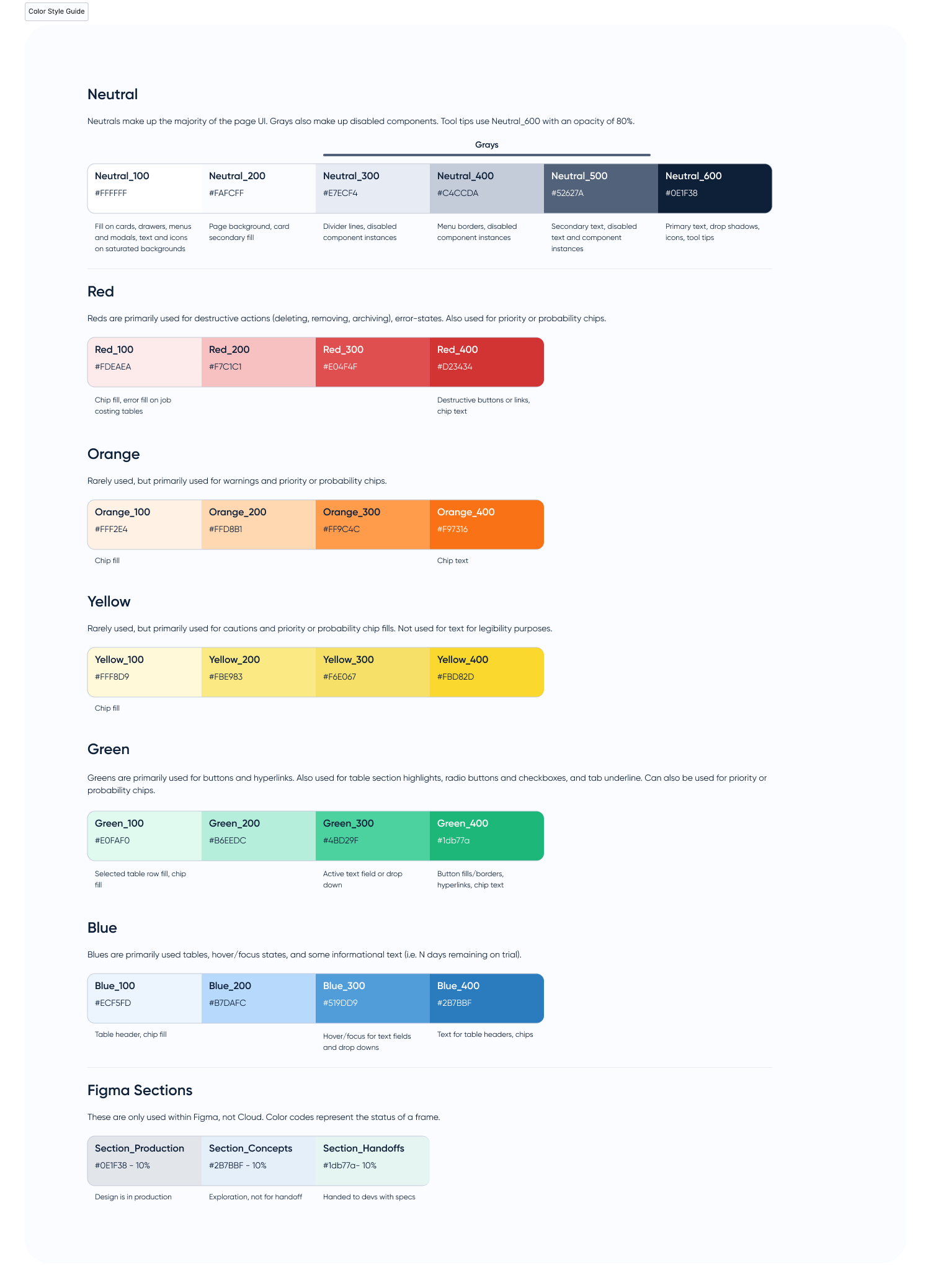
- Established a neutral, professional base palette in OKLCH, then added semantic roles like
surface/subtle,border/strong, andalert/critical. - Rationalized type into a clear hierarchy for headings, body, and meta text tuned for dense, data-heavy screens.
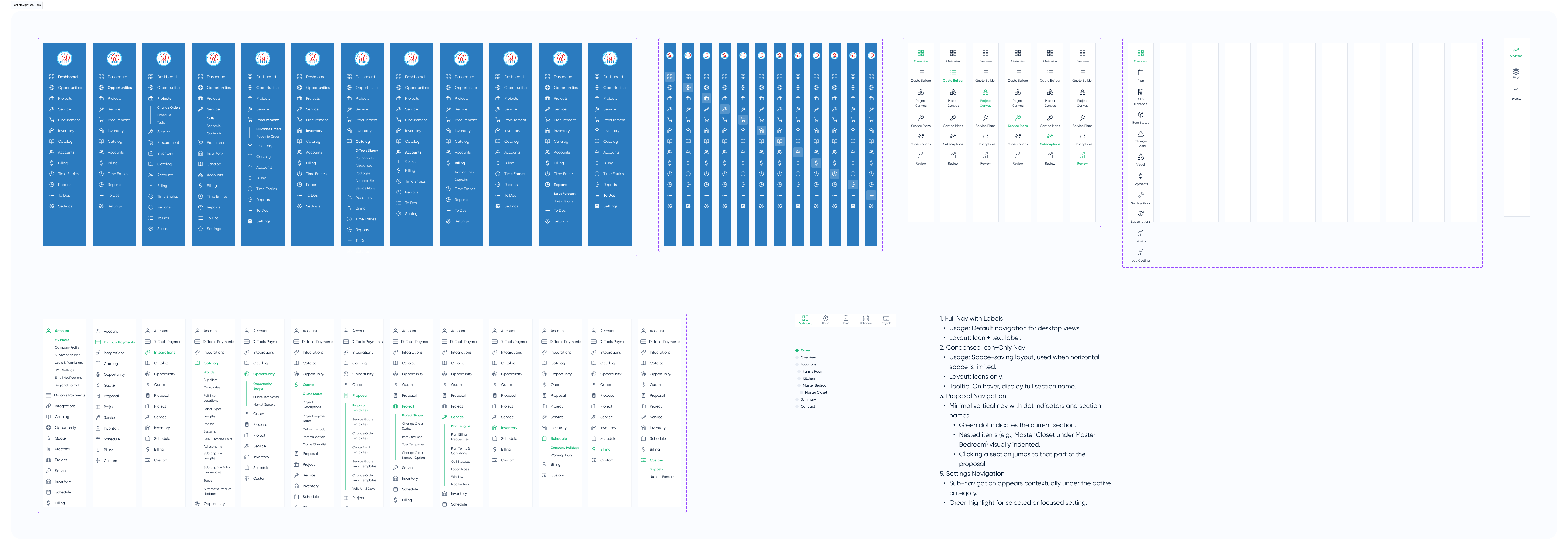
- Created a spacing system aligned with existing engineering breakpoints to minimize layout churn.
Design a token architecture engineers can use
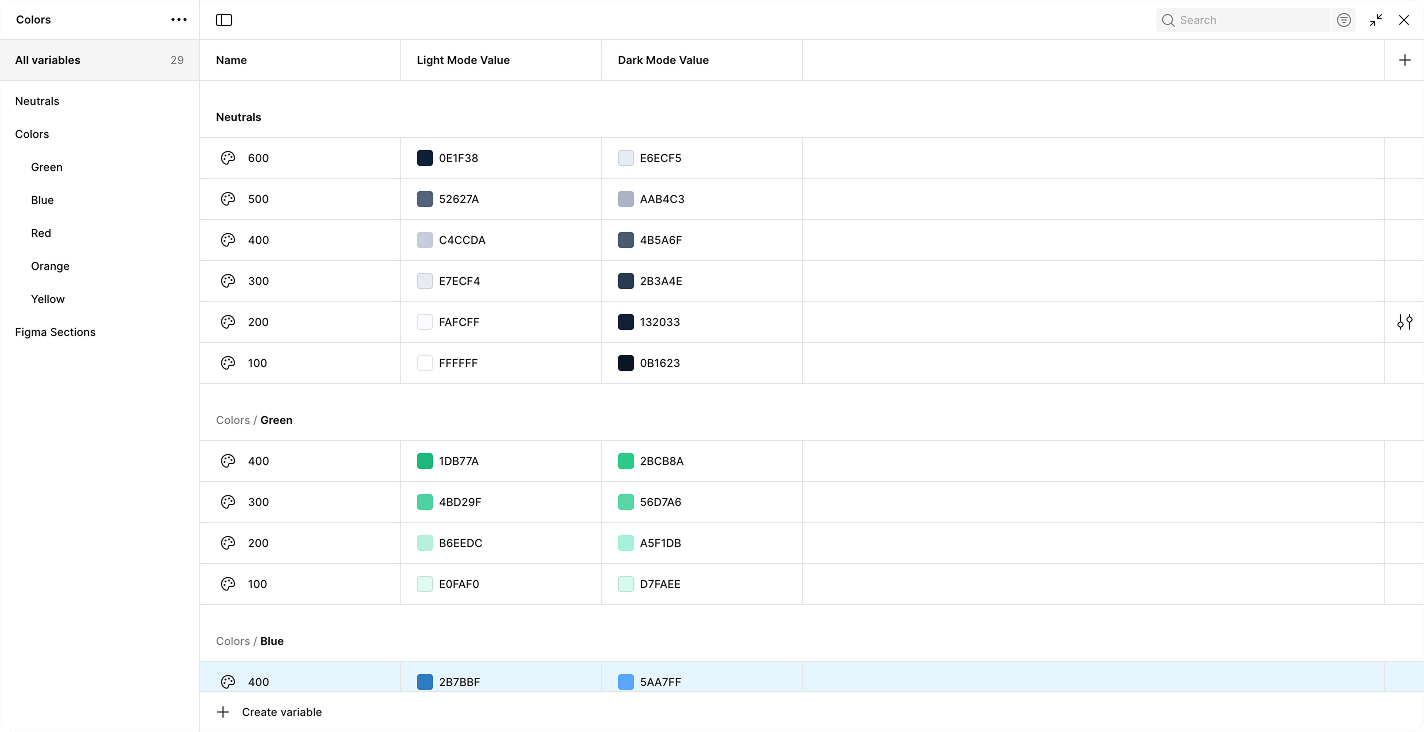
From foundations, I created a token architecture that separates raw values from semantic usage so themes can change without rewriting components.
- Introduced design tokens for color, typography, spacing, and radius in Figma, mirroring a structure that can be mapped directly to variables in code.
- Documented naming conventions and usage examples (for example, when to use
border/strongvsborder/subtle).
Build, document, and govern
With tokens stable, I rebuilt high-traffic components matching real product states, standardized interactive states across all patterns, and documented configuration options to reduce one-offs.
To keep the system healthy, I set up a lightweight intake process for new components and partnered with engineering on a code-backed library so reuse lives beyond Figma.
System architecture
Tokens
Color, type, spacing, and radius tokens for neutral, brand, and semantic roles — the raw ingredients everything else pulls from.
FoundationsSemantic roles
Tokens mapped to intent: surface/primary, border/strong, text/muted, alert/critical, and so on.
MappingComponents
Reusable patterns built from roles: buttons, forms, navigation, tables, modals.
Building blocksProduct surfaces
Full screens and workflows — dashboards, record views, reporting flows — composed from those components.
ScreensThe funnel connects a single source of truth for tokens to complete product workflows.
Design highlights
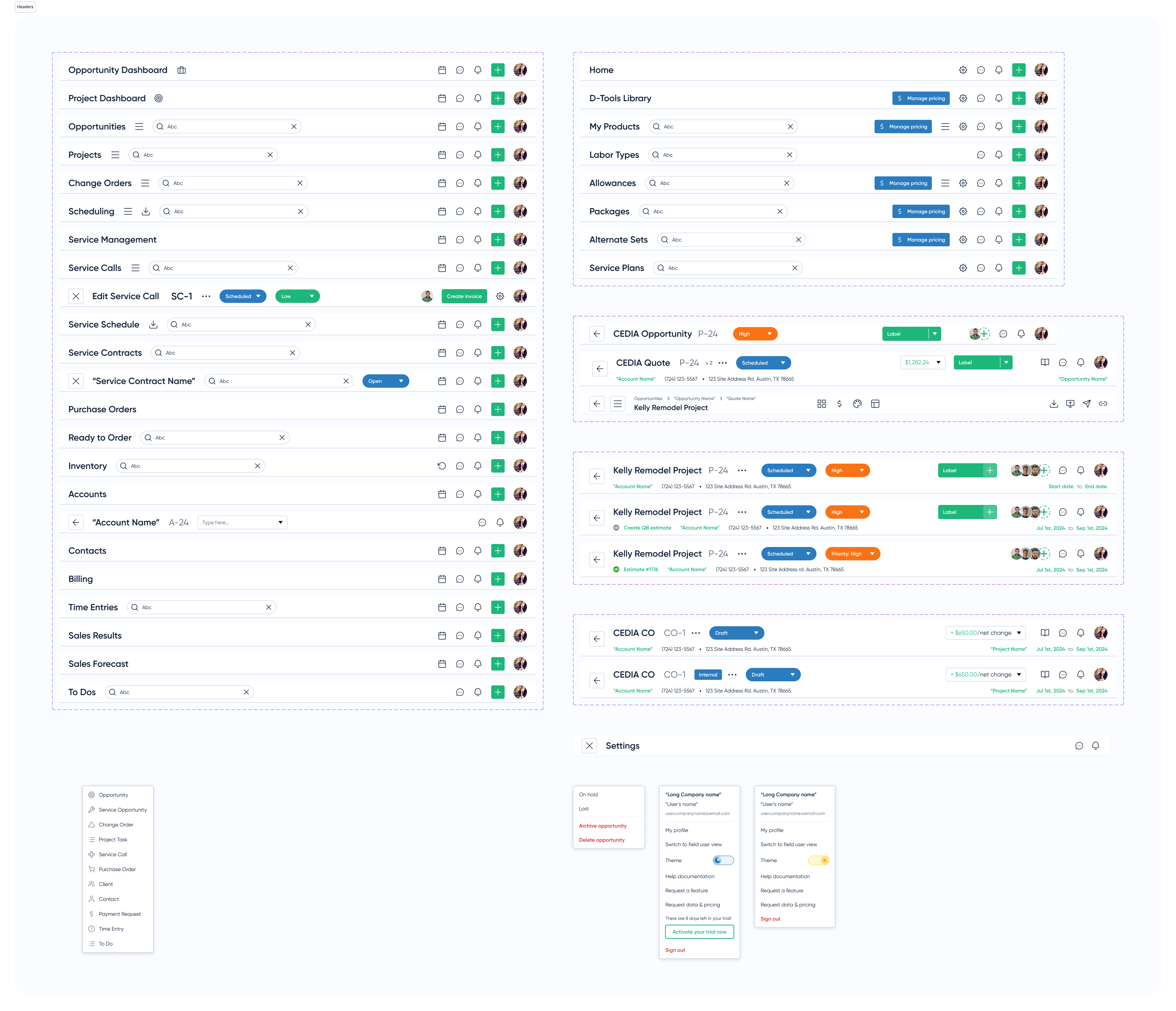
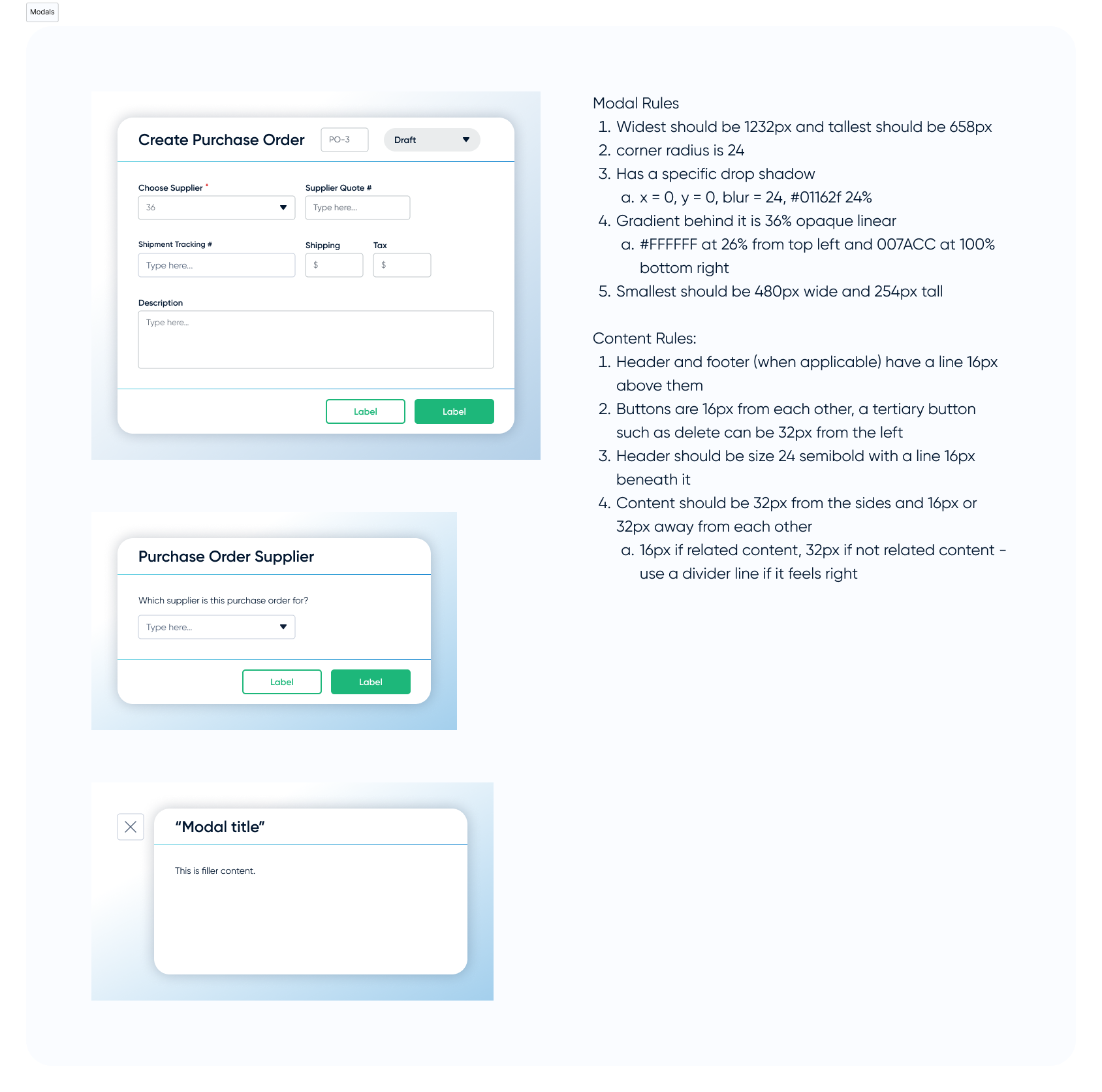
A few snapshots of how the system shows up in real product surfaces, from token definitions to navigation, headers, and component rules.
Adoption & rollout
Rolling this out was as much about behavior change as it was about UI. I broke adoption into clear phases so teams always knew what to do next.
Phase 1: Designer pilot — Rolled system out to designers first. Within six months, 85% of new UI used library components
Phase 2:Education & migration — Created migration guides and ran working sessions to refactor legacy screens, prioritizing high-visibility flows
Phase 3:Code integration — Partnered with engineering to implement tokens in code. New features now use system components by default
Business impact
Customer-facing teams now describe the platform as one product instead of four tools stitched together, and demos no longer require custom theming to feel credible.
Component reuse reached 85% for new designs, and requests to white-label the product dropped by roughly 50% as the default UI felt more professional and on-brand.
The design system frees both design and engineering from pixel-pushing, so more energy goes into shipping value-add features rather than recreating UI from scratch.
Lessons & next
Lessons
- Single-owner systems don’t scale forever. Being the sole owner worked for v1 but became a bottleneck. I am now defining shared ownership with an engineering counterpart and documenting decision criteria so others can safely contribute.
- Migration is where systems live or die. Designers adopted the new components quickly, but we underestimated the effort to migrate legacy screens. A more explicit module-by-module migration plan earlier would have reduced friction.
- Governance has to be visible. Early on, people weren’t sure how to propose new patterns. A lightweight intake process and “experimental” labels made it safer to evolve the system incrementally.
Next
- Deepen engineering integration. Continue evolving the code-backed library so all new features use system components by default and reduce custom one-offs in production.
- Ship dark mode end-to-end. The dark-mode token set is designed; next step is coordinating an end-to-end rollout across modules, then exploring whether customer theming makes sense.